
Selection Guide for Food-Grade Absorbent Pads – 3 Practical Criteria from the Manufacturing Floor
When selecting absorbent pads, many buyers tend to think, “As long as it has high absorbency, that’s enough.” However, from a manufacturing perspective, choosing the wrong pad can lead to insufficient absorption, higher costs, and in some cases, a decline in product value. Here are three practical criteria based on hands-on manufacturing experience.
① Choose by Absorbency
The appropriate absorbency level varies depending on the type of food.
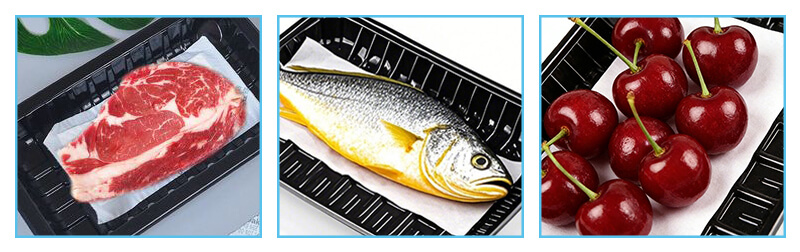
- Red meat (beef, lamb) and large fish: These produce large amounts of purge that continue to release during transit, making high-absorbency pads the right choice.
- Poultry and pork: Medium absorbency is usually sufficient.
- Fruits and vegetables: Only minimal moisture needs to be absorbed. Over-absorption can cause drying, so low-absorbency pads are more suitable.
As a rule of thumb, choose absorbent pads with an absorption capacity of at least 1.5 times the estimated purge volume. This ensures reliable performance even when condensation occurs due to temperature changes during transit.
② Choose by Material
The choice of surface material and absorbent core composition should also align with your application.
Surface layer (contact with food)
Food-grade PE film: Smooth surface that does not stick to food and peels off easily from trays. Offers excellent water resistance and safety, compliant with food contact material standards.
Bottom layer (contact with tray)
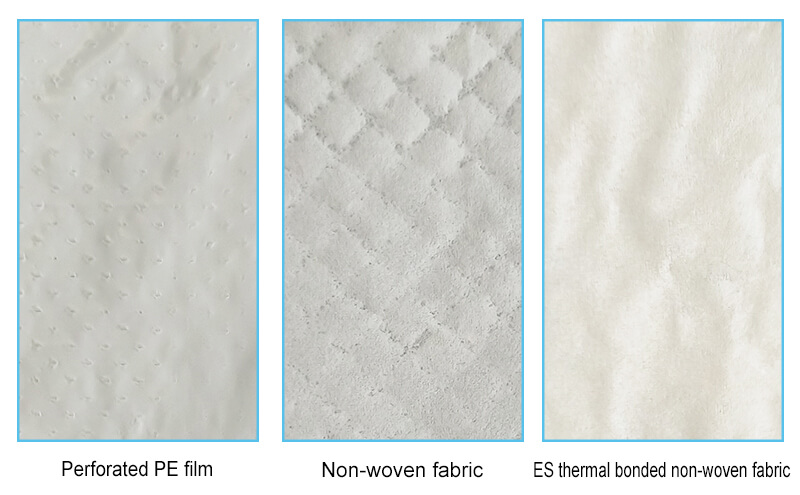
- Non-woven fabric type: Directs liquid smoothly into the absorbent pad core and locks it firmly in place. Suitable for general transport needs.
- Perforated PE film type: Allows rapid liquid passage while reinforcing the pad. Ideal for products with high purge volume or extended transit times.
-
Food Absorbent Pad Food Absorbent Pad Applications
Absorbent core options
- SAP (Super Absorbent Polymer) – offers superior absorbency and liquid retention, well-suited for long-distance transport.
- For markets with strict environmental requirements, starch-based biodegradable materials are also available, providing comparable absorbency while significantly reducing environmental impact after disposal.
③ Choose by Size
Size selection is another critical factor for absorbent pads.
- For tray packaging: Choose a pad slightly smaller than the tray bottom to effectively absorb purge while preventing the pad from extending beyond the edges and compromising product presentation.
- For insulated coolers (ice-fresh transport): A larger pad covering approximately 80% of the cooler bottom is ideal. This ensures uniform absorption of meltwater and maintains consistent product quality.
Absorbent pads that are too large create waste, while pads that are too small lead to insufficient absorption. Selecting the right size for your packaging format is essential.
Advice from the Manufacturing Floor
By combining the above three criteria, you can select the most suitable absorbent pad for your specific application.
Leveraging our manufacturing expertise, we provide customized recommendations based on your specific conditions. If you have any questions about the right combination of absorbency, material, and size, please feel free to reach out. Free samples are also available upon request.